
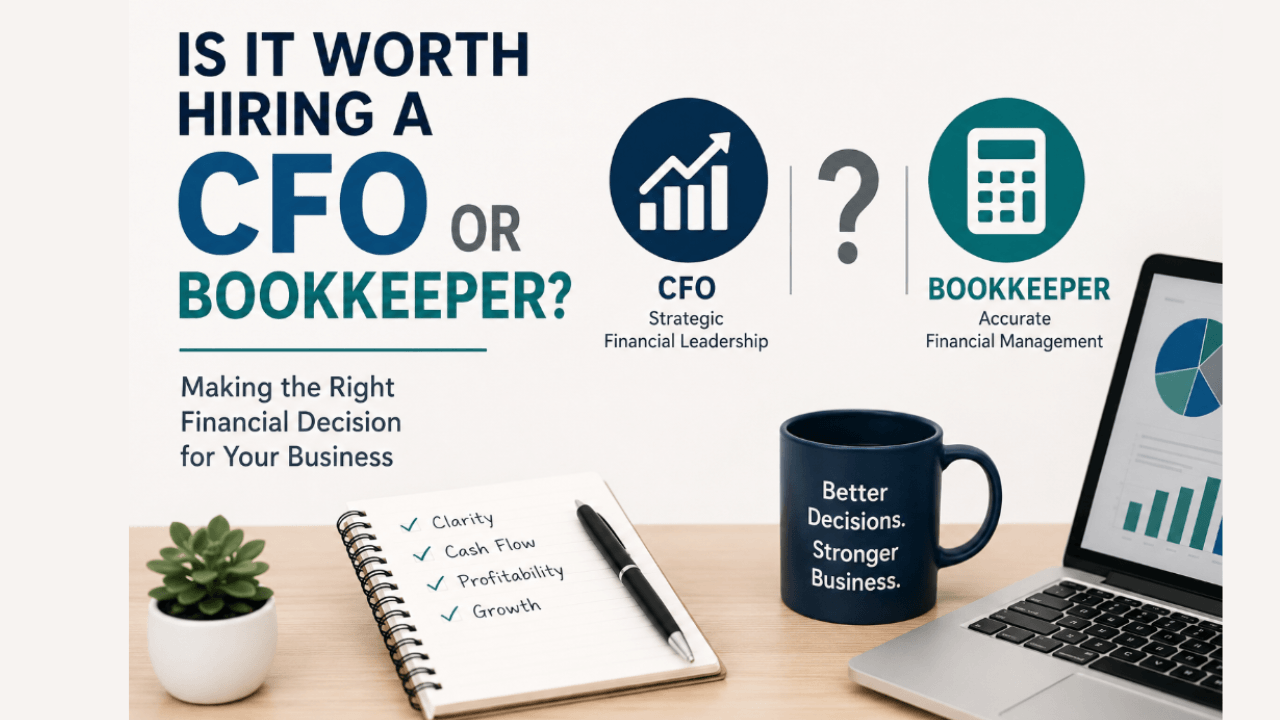
At one point, many business owners eventually reach a point where managing finances internally becomes difficult, inconsistent, or overwhelming. Invoices pile up. Cash flow becomes harder to predict. Financial reports are unclear. Decisions feel reactive instead of strategic.
At that stage, owners often ask an important question: Is it worth hiring a CFO or bookkeeper?
The honest answer is yes, in many situations, but the right choice depends on the complexity of the business, the company’s growth stage, and the type of financial support actually needed. A bookkeeper and a CFO solve very different problems. Understanding the difference can help business owners avoid unnecessary costs while improving financial clarity and decision-making.
A Bookkeeper and a CFO Are Not the Same Role
One of the biggest misconceptions is that bookkeeping and CFO services are interchangeable. They definitely aren’t. A bookkeeper is typically responsible for recording and organizing financial transactions. So, when do I hire a bookkeeper and when do I hire a CFO? Well, let’s first discuss the difference. A bookkeeper’s work may include:
- Managing invoices
- Tracking expenses
- Reconciling accounts
- Processing payroll
- Maintaining accurate financial records
- Preparing reports for accountants or tax professionals
A CFO, or Chief Financial Officer, operates at a more strategic level. Their responsibilities often include:
- Financial forecasting
- Cash flow strategy
- Profitability analysis
- Budget planning
- Financial decision-making
- Growth planning
- Risk assessment
- Strategic financial leadership
In simple terms, bookkeepers help maintain financial accuracy. CFOs help guide financial direction. Many businesses eventually need both, but not always at the same time.
Most Small Businesses Need Bookkeeping Before They Need a CFO
For many small businesses, hiring a reliable bookkeeper is often the more immediate priority. Without accurate bookkeeping:
- Financial reports become unreliable
- Tax preparation becomes stressful
- Cash flow problems are harder to identify
- Owners make decisions using incomplete information
A good bookkeeping system creates visibility into the financial health of the business. That visibility matters because business owners cannot make strong operational or strategic decisions if the underlying financial data is inaccurate.
In many cases, business coaching conversations around growth, hiring, profitability, or leadership challenges become difficult without clear financial reporting.
A CFO Becomes More Valuable as Complexity Increases
As businesses grow, financial decisions become more complicated. A company may need help with:
- Managing rapid growth
- Improving profitability
- Preparing for expansion
- Navigating financing
- Building long-term forecasting models
- Managing multiple revenue streams
- Evaluating acquisitions or investments
At that stage, a CFO can provide strategic financial leadership that goes beyond bookkeeping or accounting alone. So, it makes sense to hire one, right? It still depends, which is why it helps to confer with a business coach when making complicated decisions, like when to hire or who to hire, to help you solve a specific business challenge.
You see, not every growing business needs a full-time CFO.
Many organizations use:
- Fractional CFO services
- Outsourced financial leadership
- Interim CFO support
- Financial consultants
This approach can provide executive-level financial insight without the cost of a full-time executive hire.
One of the Biggest Problems Is Delaying Financial Support Too Long
Many business owners postpone hiring financial help because they believe they should manage everything themselves. That is understandable, especially in smaller companies where budgets are tight.
But delaying financial support too long can create avoidable problems, such as:
- Poor cash flow management
- Missed financial warning signs
- Inaccurate pricing decisions
- Tax issues
- Growth without profitability
- Weak forecasting
- Unclear financial priorities
In some businesses, owners spend years focused on revenue growth while paying very little attention to margins, operational efficiency, or long-term financial strategy. That disconnect is more common than many people realize.
Business Coaches Often Help Owners Make These Decisions
One area many business owners overlook is how business coaching can help evaluate decisions like hiring a bookkeeper, accountant, controller, or CFO. A business coach is not a replacement for a financial professional. Business & Executive Coaching should not substitute for accounting, tax, or legal expertise.
However, business coaching and executive coaching often help owners determine:
- What type of financial support does the business actually need
- Whether current financial systems are sufficient
- If leadership is relying on accurate data
- How financial visibility impacts business growth decisions
- Whether operational problems are tied to financial management issues
In many cases, owners know something feels financially disorganized but are unsure where the actual problem exists. A structured business coaching process can help identify whether the issue is operational, strategic, financial, leadership-related, or a combination of several factors.
That perspective is often valuable because businesses sometimes hire too senior a role too early, or wait too long to bring in meaningful financial support.
Financial Expertise Alone Does Not Solve Organizational Problems
Another misconception is that hiring a CFO automatically fixes business performance. Financial leadership can improve visibility and decision-making, but it cannot solve every operational or leadership issue.
For example:
- A CFO cannot replace poor communication inside a leadership team
- A bookkeeper cannot fix weak accountability systems
- Better reports do not automatically create better execution
- Financial insight still requires disciplined decision-making
This is why leadership development, management coaching, and operational alignment often matter alongside financial improvements. Strong businesses usually require both sound financial systems and effective leadership structures.
What Most Business Owners Do Not Realize
Many owners assume financial stress is caused purely by a lack of revenue.
In reality, financial pressure is often tied to:
- Weak systems
- Inconsistent reporting
- Poor forecasting
- Operational inefficiency
- Unclear priorities
- Lack of strategic planning
Businesses can generate significant revenue while still struggling financially.
That is one reason executive coaching and business growth coaching often include conversations around decision-making, accountability, financial visibility, and organizational structure, not just sales growth.
How Focal Point Approaches These Conversations
Focal Point Business Coaching Ohio works with business owners on broader leadership, operational, and strategic challenges, including helping leaders evaluate business infrastructure decisions.
That can include discussions around:
- Financial visibility
- Organizational structure
- Leadership accountability
- Growth planning
- Operational bottlenecks
- Executive decision-making
Focal Point Business Coaches use structured systems and collaborative coaching methodologies designed to help leaders make more informed business decisions over time. At the same time, coaching is treated as one piece of the broader business support process, not a replacement for accounting firms, CFO services, legal advisors, or financial professionals. It is this distinction that matters because sustainable business growth typically depends on multiple forms of expertise working together.
The Right Financial Support Depends on the Business
There is no universal answer to whether a business should hire a bookkeeper or CFO. Some businesses simply need better bookkeeping discipline and reporting consistency. Others need strategic financial leadership to support growth and decision-making. The key is understanding the actual problem before hiring the solution.
Good financial systems create clarity and strong leadership helps organizations act on that clarity effectively. For many business owners, the challenge is not choosing between bookkeeping and executive financial leadership. It is recognizing when the business has outgrown the current approach.
For help with other frequently asked business questions, check out our blog here: https://focalpointcoachingohio.com/blog/. We have answered nearly 80 questions about professional development, small business and executive career advice.