
Leaders often begin asking this question when something feels off inside the organization. Productivity might still be acceptable. Revenue may even be growing. Yet meetings feel heavier, communication becomes cautious, and collaboration starts to decline.
The direct answer is this: problems in team culture usually appear first through subtle behavioral patterns rather than dramatic events. Early warning signs often include reduced communication, declining accountability, quiet disengagement, and increased tension between team members. Somewhere, a trust issue has developed.
Business coaching and executive coaching often focus on helping leaders recognize these signals early, before cultural issues become structural problems.
Why Culture Issues Are Often Hard to Spot
Organizations don’t drift into having a great culture. Without intentionality, culture will drift right off the proverbial cliff.
Small frustrations go unspoken. Expectations become less clear. Leaders become busier and communication becomes more transactional.
Because the changes are incremental, they are easy to overlook until performance or retention begins to suffer.
Leadership coaching often helps executives step back and examine patterns that are difficult to see while managing daily operations.
Common Early Warning Signs
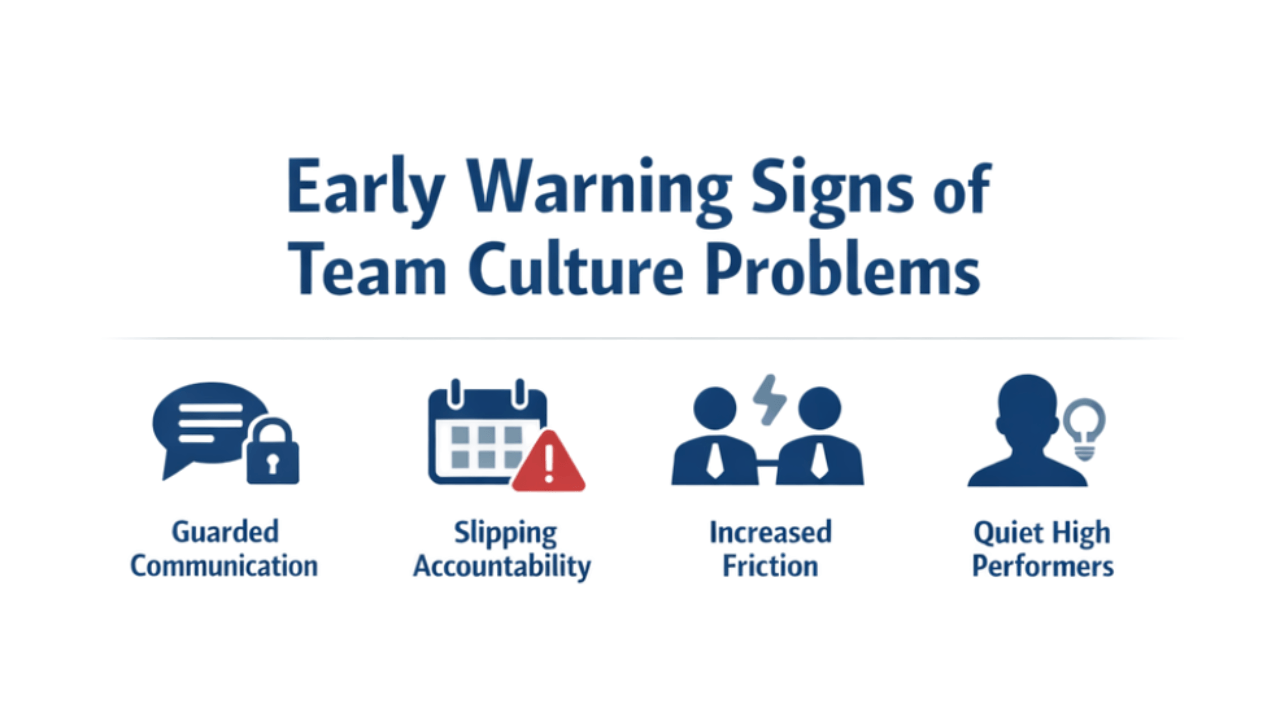
Communication Becomes Guarded
When team culture is healthy, people feel comfortable sharing ideas, concerns, and disagreements respectfully. When culture weakens, conversations become cautious.
Employees may avoid raising problems or making challenging decisions. Silence begins to replace constructive dialogue.
Accountability Starts to Slip
Deadlines become more flexible. Responsibilities become less clear. Leaders may notice that follow-through requires more reminders.
This shift often indicates that expectations and standards are no longer consistently reinforced.
Increased Friction Between Teams
Cultural issues sometimes appear as tension between departments or individuals. Collaboration decreases, and teams may begin protecting their own priorities rather than supporting shared goals.
Management coaching frequently focuses on restoring alignment when these patterns appear.
High Performers Become Quiet
One subtle signal is when strong performers stop offering ideas or feedback. They may continue delivering results but become less engaged in discussions or innovation.
Disengagement among high performers is often an early indicator of cultural strain.
Rising Turnover or Burnout
When people begin leaving or expressing exhaustion more frequently, leaders should examine cultural factors alongside workload and organizational structure.
Leadership development often addresses the underlying systems that influence team experience.
Pros of Recognizing Cultural Warning Signs Early
When leaders identify culture issues early, they can:
- Restore open communication
- Reinforce accountability expectations
- Strengthen leadership alignment
- Address structural challenges before they escalate
Early awareness allows leaders to make adjustments before morale or performance declines significantly.
Challenges in Addressing Culture Issues
Cultural problems are not always simple to diagnose.
Leaders may initially assume the issue involves individual personalities rather than organizational systems. In some cases, addressing culture requires leaders to examine their own communication patterns and expectations.
Improving culture requires consistent leadership behavior rather than a single initiative.
Common Misconceptions
Misconception 1: Culture problems appear only during conflict.
In many cases, the first signals are quiet disengagement and reduced collaboration.
Misconception 2: Culture can be repaired through motivational events.
Short-term activities rarely change behavior without a leadership structure.
Misconception 3: Culture is defined only by company values.
Culture is shaped daily through decisions, communication, and accountability systems.
What Most Leaders Do Not Realize
Team culture often reflects leadership clarity.
If priorities are unclear, accountability is inconsistent, or communication lacks transparency, culture may gradually deteriorate. Employees tend to mirror leadership patterns.
This is why executive coaching and business coaching often focus on leadership behavior rather than only employee engagement strategies.
When Coaching Helps and When It Does Not
Business coaching and leadership coaching can help organizations address culture issues when:
- Communication patterns have weakened
- Leadership teams are misaligned
- Accountability expectations are inconsistent
- Decision-making lacks transparency
Coaching may be less effective when cultural issues involve serious HR violations or legal concerns. In those cases, specialized HR or legal professionals may need to lead the response.
Coaching helps leaders strengthen the systems and behaviors that shape daily culture.
How We Approach Team Culture
At Focal Point Business Coaching Ohio, culture is viewed as a result of leadership discipline and operational structure.
Business coaching and executive support often focus on improving:
- Strategic clarity
- Leadership alignment
- Accountability systems
- Communication practices
Focal Point coaches collaborate and share experience across industries, helping leaders recognize patterns that influence team behavior.
If a situation requires specialized HR guidance, appropriate professionals are recommended. Coaching strengthens leadership systems so culture can stabilize and improve over time.
Final Perspective
Team culture rarely fails overnight. It changes gradually through daily habits, expectations, and leadership behavior.
Leaders who pay attention to early warning signs can address cultural drift before it affects morale, retention, or performance. Clear communication, consistent accountability, and disciplined leadership systems remain the strongest foundation for a healthy team culture.